
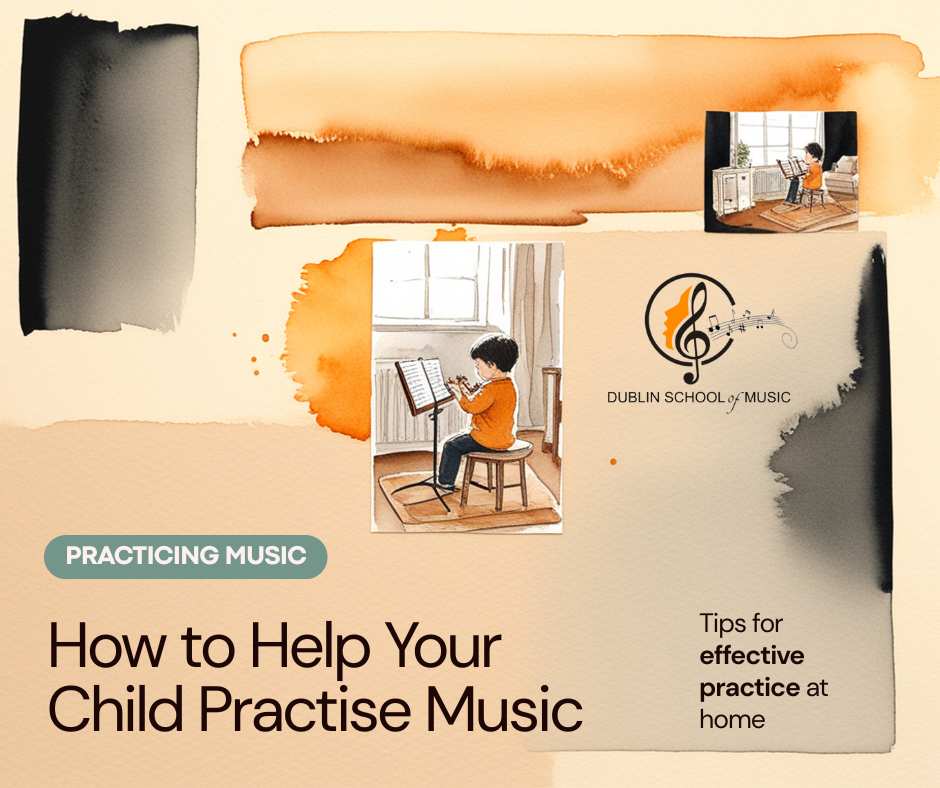
It’s 5:30 on a Tuesday. Homework is done, dinner is almost ready, and somewhere in the house is an instrument that hasn’t been touched since the lesson three days ago. You know what comes next: the reminder, the negotiation, the resistance, the eventual capitulation—theirs or yours. By the time practice actually happens, everyone’s mood is ruined and the fifteen minutes feel like penance rather than progress.
If this sounds familiar, you’re not failing. You’re experiencing one of the most common friction points in music education: the gap between what happens in a lesson and what happens at home. The good news is that there’s a better way. The less good news is that it requires rethinking what your job actually is.
Here’s the shift that changes everything: your job is not to make your child practise. Your job is to create the conditions where practice is likely to happen.
This might sound like semantics, but it’s not. ‘Making’ your child practise positions you as enforcer—the person who monitors, nags, and ultimately compels. It’s exhausting, it breeds resentment, and it doesn’t work long-term because the moment you stop enforcing, practice stops happening. Creating conditions is different. It means designing an environment, establishing a routine, and then stepping back far enough that practice becomes your child’s responsibility, not yours.
The distinction matters because sustainability matters. Music education is a long game. A practice routine that depends on your constant vigilance will collapse eventually—when you’re busy, when you’re tired, when you have a new baby or a work deadline or simply run out of patience. A routine that runs on structure rather than enforcement can survive your bad weeks.
Start with the physical environment. This is lower-effort than it sounds, and it makes a surprising difference.
The instrument should be accessible—not in a case in a cupboard, but out, ready to play. Every barrier between your child and the instrument is a reason not to practise. If the piano is in a cold room at the back of the house, practice becomes an expedition. If the guitar needs to be retrieved from under a bed and tuned before anything can happen, the activation energy is too high. Make it easy. Instrument visible, music on the stand, everything ready to go.
The best time is the time that actually works—which means the time when your child has enough energy, when the house is calm enough, and when practice doesn’t compete with something more appealing. For many families, this is immediately after school, before screens enter the picture. For others, it’s after dinner. There’s no universally right answer, but there is a right answer for your household, and finding it matters more than following someone else’s schedule.
Once you’ve identified the time, protect it. Practice happens at 4:15, every day, before anything else. Not ‘sometime this evening’ or ‘when you get around to it’. A fixed slot removes the daily negotiation. It’s not a question of whether practice will happen today; it’s simply what happens at 4:15.
Parents often worry about duration. How many minutes is enough? The honest answer is: less than you think, as long as it’s consistent.
For young beginners—five, six, seven years old—ten to fifteen minutes is plenty. Their concentration is limited, and short focused sessions are worth more than long distracted ones. As children get older and their playing becomes more complex, practice time naturally extends: fifteen to twenty minutes for ages eight to ten, twenty to thirty minutes for ages eleven and up. These aren’t rigid prescriptions, but they’re realistic benchmarks.
What matters more than the number is the consistency. Ten minutes every day is vastly more effective than an hour on Sunday. The brain consolidates learning during sleep; daily practice means daily consolidation. It’s also easier to maintain a short daily habit than to carve out a large weekly block. And for parents, it’s easier to hold the line on ten minutes than to enforce thirty.
How involved should you be? This depends on age, and it should change over time.
With young children—roughly five to seven—you’ll likely need to sit with them, at least initially. Not to teach (that’s the teacher’s job) but to keep them focused, help them remember what they’re supposed to be working on, and provide encouragement. Your presence is scaffolding; it helps them do something they can’t yet do independently.
As they get older—eight, nine, ten—your role shifts from sitting with them to being nearby. You’re in the next room, available if needed, but not supervising every note. You might check in at the start and end: ‘What are you working on today?’ and ‘How did it go?’ This maintains accountability whilst building independence.
By eleven or twelve, the goal is for practice to be genuinely their responsibility. You’ve created the structure; they operate within it. Your job becomes noticing and appreciating rather than directing and correcting. ‘That piece is sounding really good’ lands better than ‘Did you practise your scales?’
Sometimes, despite everything, practice remains a battleground. When this happens, resist the temptation to escalate—more pressure rarely produces more practice. Instead, get curious.
Is the resistance about the time of day? The difficulty of the current piece? Boredom with the repertoire? A bad dynamic that’s developed around practice? Something else going on at school or with friends? Children don’t always articulate what’s wrong, but there’s usually a reason beyond ‘they’re lazy’ or ‘they don’t care’. Your job is to find it, or at least to create space for it to emerge.
The teacher is your partner here. If practice is consistently problematic, that’s information worth sharing. Teachers can adjust what they’re assigning, suggest different approaches, or help diagnose what’s going on. They’ve seen every variety of practice struggle and often have ideas that haven’t occurred to you. Don’t wait until you’re desperate to have this conversation.
Here’s the thing that’s easy to forget in the daily grind: the relationship matters more than the minutes. If practice is destroying your evenings and poisoning your connection with your child, something needs to change—even if that means lowering expectations for a while.
Music education is a years-long endeavour. There will be seasons when practice flows easily and seasons when it’s a struggle. The goal isn’t perfect consistency; it’s sustainable engagement over time. A child who practises imperfectly but maintains a positive relationship with music is better off than one who practises under duress and quits at fourteen, hating everything about it.
Your long-term aim is a young person who plays because they want to, not because you’re standing over them. That takes time. It requires them to experience enough progress that the instrument becomes rewarding in itself. It won’t happen immediately, and it won’t happen through force. It happens through structure, support, patience, and the gradual transfer of responsibility from you to them.
So create the conditions. Protect the time. Keep the sessions short and consistent. Stay involved when they’re young, and step back as they grow. And remember, on the hard days, that you’re playing a long game—and the relationship you’re building matters as much as the music.
If practice has become a persistent struggle, talk to your child’s teacher. We’re here to help you find an approach that works for your family—one that supports progress without sacrificing your evenings or your relationship. Contact us at info@dublinschoolofmusic.ie
Frequently Asked Questions
For young beginners aged five to seven, ten to fifteen minutes is sufficient. Children aged eight to ten benefit from fifteen to twenty minutes, whilst those aged eleven and above can manage twenty to thirty minutes. Consistency matters more than duration—short daily sessions are far more effective than longer weekly ones.
The best time is whenever your child has energy and the house is calm. For many families, this is immediately after school, before screens or other activities begin. The key is to choose a time that works consistently for your household and protect it—practice at the same time each day removes the need for daily negotiation.
This depends on age. For children aged five to seven, sitting with them provides helpful focus and encouragement. From ages eight to ten, shift to being nearby rather than directly supervising. By eleven or twelve, practice should be largely independent, with occasional check-ins from you at the start and end.
Resistance usually has an underlying cause: the timing might be wrong, the current piece too difficult or too boring, or something else may be affecting their mood. Rather than escalating pressure, get curious about what’s behind the resistance. If practice remains consistently problematic, speak with your child’s teacher—they can often adjust their approach or suggest strategies that help.
Focus on environment and routine rather than motivation. Keep the instrument accessible and ready to play, establish a consistent practice time, and remove barriers that make starting difficult. Intrinsic motivation develops over time as your child experiences progress; in the early years, structure matters more than enthusiasm.
Generally, no. Your role is to support practice happening, not to teach—that’s the teacher’s job. Correcting mistakes can create tension and undermine your child’s confidence. Instead, offer encouragement and save specific concerns for the teacher to address in lessons.
If practice is consistently damaging your relationship with your child, something needs to change. The relationship matters more than the minutes. Consider lowering expectations temporarily, adjusting the timing, or speaking with your child’s teacher about reducing the practice load. A child who maintains a positive relationship with music is better off long-term than one who practises under duress and quits resentfully.
You don’t need musical knowledge to support practice. Your job is to create the conditions—accessible instrument, protected time, calm environment—and to offer encouragement. Showing interest (‘Can you play me what you’ve been working on?’) matters more than technical input. The teacher handles the instruction; you provide the structure and support.
Don’t wait until you’re desperate. If practice has been a struggle for more than a few weeks, raise it with the teacher. They can adjust what they’re assigning, suggest different approaches, or help identify what’s going wrong. Teachers have seen every variety of practice difficulty and are there to help you find a sustainable path forward.