Most people arrive at a music school knowing they want to play something, without being at all certain what. That is a perfectly good place to start.
The Dublin School of Music has been teaching since 2003, and in that time one thing has held true more often than any other: the instrument a student imagines themselves playing is frequently not the one they end up loving. Someone comes in for guitar and leaves committed to the saxophone. A parent books piano for a child who turns out to have been born for the drums.
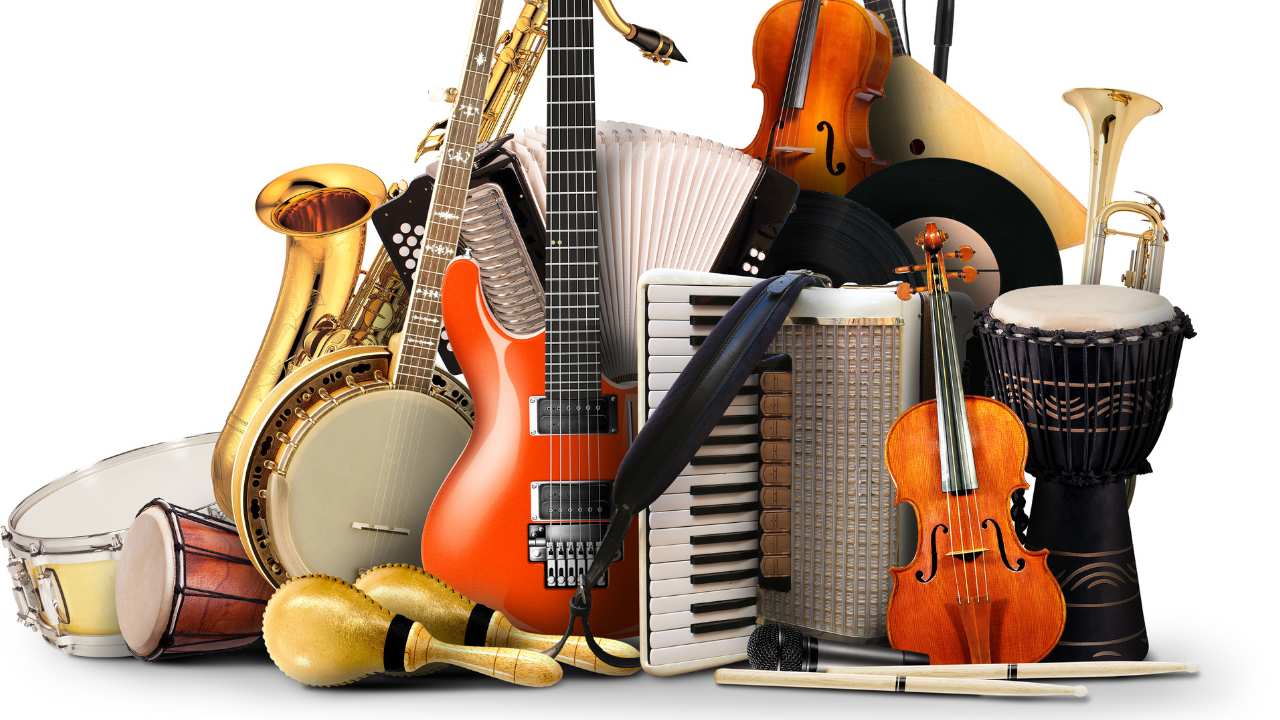
Which is why breadth matters. We teach eleven instruments across three schools in Terenure, Tallaght and Stillorgan, so that finding the right one is a matter of trying rather than guessing.
Instruments for every interest
Each of these is taught one-to-one, from complete beginner upwards. Follow any of them to see what lessons involve, who they suit and where they run.
- PianoFrom age four
- ViolinClassical and Irish fiddle
- GuitarAcoustic and electric
- Classical GuitarNylon-string fingerstyle
- Bass GuitarThe engine of the band
- UkuleleFastest to first song
- DrumsFull kit, from age seven
- SingingThe instrument you own
- FluteBreath, tone, repertoire
- ClarinetClassical through to jazz
- SaxophoneJazz, pop, funk, classical
- Recorder & Tin WhistleThe most affordable start
Alongside instrumental tuition we also run pre-instrumental junior music for the youngest beginners, music theory, and a Leaving Certificate Musicianship Programme for students taking music as an exam subject.
Not sure where to begin? Readiness varies a great deal by instrument — piano and violin suit children from four or five, drums and singing from around seven, guitar from about eight.
We have written two guides on exactly this: Which Instrument Should Your Child Learn? and When Should My Child Start Music Lessons?
Styles to suit every taste
An instrument is only half the decision. The other half is what you want to play on it, and a student who spends a year on repertoire that bores them will not last a second.
Our teaching spans classical, rock, pop and jazz, and lessons are built around what a student actually listens to. A teenager who wants to learn the songs on their phone and an adult working through the graded classical syllabus are both doing serious musical work — they simply need different material in front of them.
The teachers
Every teacher here is a fully qualified musician, and most are graduates of the Royal Irish Academy of Music or BIMM. Among them are performing musicians, recording artists and touring players who continue to work professionally alongside their teaching.
That matters more than it might sound. A teacher who still performs brings the practical knowledge that no syllabus contains: how to recover when something goes wrong mid-piece, how to play with other people, and what actually happens on a stage.
Finding your own voice
The purpose of all this variety is not choice for its own sake. It is that musical interests are genuinely hard to predict from the outside, and the only reliable way to discover them is to put a student in front of an instrument and see what happens.
Some find it immediately. Others take a term, or try a second instrument, or return years later to something they abandoned as a child — a far more common story than most people imagine. All of those are ordinary routes to the same place.
Start where you are
Lessons are one-to-one and enrolment is continuous, so you can begin any week rather than waiting for a term. A three-lesson taster course costs €90, and if you continue, that €90 comes off your full fees — enough time to tell whether an instrument suits you, at no extra cost.
All eleven instruments are taught at Terenure, Tallaght and Stillorgan.